
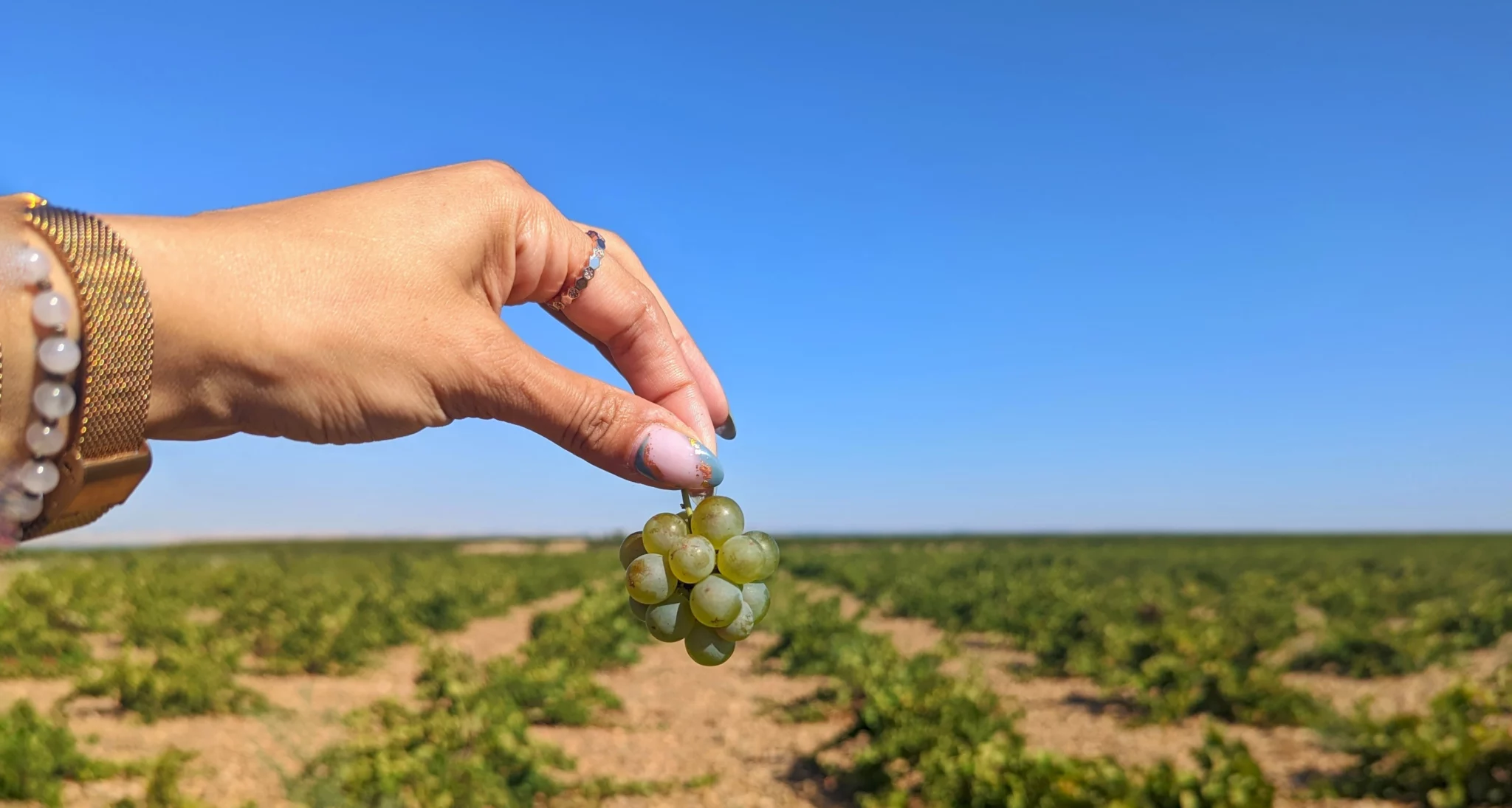
While travel was discouraged over the past few years, I contented myself with travelling through television, film, food and of course, wine. One of the places I “visited” through my glass of vino was the Rueda appellation region of Spain. And wonderfully, once travel restrictions eased, I offered the chance to tour the region with a group of fellow writers. Of course, I jumped at the chance.
Our days flew by as we visited captivating cities, a variety of vineyards and a bevy of bodegas (winery in Spanish). It was a wonderful whirlwind as we explored, we learned, we ate, and we enjoyed.
And, of course, we drank Verdejo.
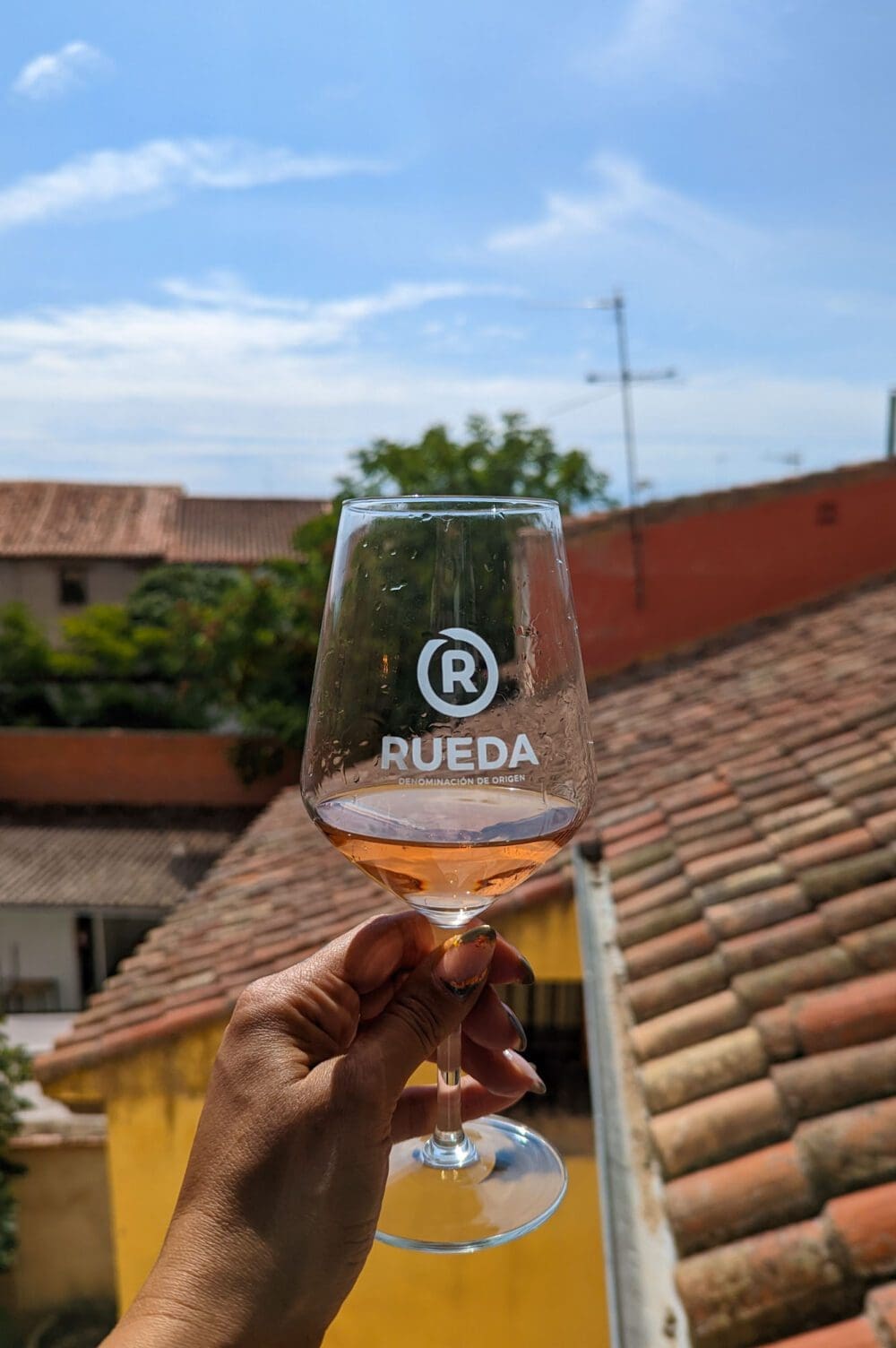
Verdejo is the indigenous white grape that has grown in the Rueda region of Spain for centuries. Verdejo, meaning green in Spanish, is true to its name with bright, springy notes and a complexity in line with the character of the region. For those not familiar with Verdejo, think Pinot Grigio, but with attitude! Along with Sauvignon Blanc, another principal grape in the region, Verdejo has cornered the white wine market in Spain, and is rapidly growing in popularity around the world.
Making the Journey
From Toronto, there are multiple options to travel to the Rueda region of Spain. Our group flew into Madrid, as the appellation is just a couple of hours north of the capital city by car. The Rueda Region is located in the region of Castile an Leon, divided between the provinces of Segovia and Vallodolid. A wonderful way to break up the drive to wine country is to stop in the capital city of Segovia, the stunning historic locale that hosts the 800-metre-long Roman Aqueduct of Segovia.


In the shadow of the Aqueduct we sat down to a delicious lunch at Meson de Candido, a Spanish restaurant located in a centuries old tavern serving gourmet traditional cuisine, including a region speciality: suckling pig. The suckling pig was beyond a dish being served, but a spectacle to be seen, as evidenced by the crowd that formed. Chef Cándido López, the 3rd generation head of the restaurant and family, gave an impassioned, if not slightly tongue in cheek speech before making a show of cutting the tender piglet with a dinner plate before an audience of diners and onlookers alike.


In Segovia, we toured the city, learning about the culture, history and architecture that weaved through the cobble-stoned streets, a showcase of a near millennium of human habitation and influence.


The pinnacle of our tour and indeed Segovia itself, was the Alcazar. This medieval fortress meets castle is one of the most distinctive in the country, and rises above Segovia like a ship on the swell of the sea.


The Alcazar was the home of Queen Isabella I of Castile, when she and her husband Ferdinand of Aragorn united Spain under their two dynasties. The castle contains a dearth of beautiful tapestries, paintings, and other artifacts from across its history and inhabitants.


After our break in Segovia, we drove another hour or so on to Valladolid, the capital city of the province that shares its name. This city is simultaneously historic and modern; is one of the larger and more bustling areas close to the wineries of Rueda. Valladolid makes for a great base for touring and visiting different parts of the D.O. Rueda region. From the 11th century, when Verdejo first found its roots in Spanish soil, to now when some of the most modern winemaking techniques are in use, the history and culture of this part of Spain creates an eclectic and adventurous blend.
A Gastronomic Paradise
Food and wine are already a match made in heaven, and the residents of Valladolid, La Seca, and all the other areas that make up the Rueda region have raised the gastronomy bar. Every meal was a culinary experience that was just as divine and unique as the last And of course, perfectly paired with Verdejo from Rueda.
In fact, the food scene is full of history, that Valladolid was the birthplace of tapas in Spain. On our tapas tour (an experience I highly recommend when visiting Valladolid) we got the chance to taste a range of tapas, from the international award winning, to the local favourites, and the secret finds.


I don’t know what magic is in the hands of Spanish chefs, but every meal is delectable, from the simplest snacks to the most complex dishes. Something as straightforward as bread, cheese, tomatoes and cured meats can turn into a sumptuous feast in Spain.


This traditional Spanish spread is exactly what we enjoyed for lunch while visiting the Pandora winery (Bodegas Pandora). I already knew their wine was delicious, but the experience of sipping their refreshing Verdejo while sampling a beautiful homestyle meal was unforgettable.


On the other hand, the Spanish are known for their creativity and flair when it comes to cuisine, and we had the pleasure of dining in multiple Michelin star restaurants on our adventures One of these was a short drive from our hotel in Valladolid, and located in deep tunnels under Yllera Winery. The restaurant was El Hilo de Ariadna, a dimly lit and sumptuously decorated dining space located below the winery structure.


The extravagant feast involved multiple courses, a mix of innovative and traditional dishes showcasing the many flavours of Spain, each paired with a different Bodega Yllera wine, and each more delicious and decadent than the last.


From the Grape to the wine
From the 11th century, when Verdejo first found its roots in Spanish soil, to now when some of the most modern winemaking techniques are in use, the history and culture of the Rueda region creates an eclectic and adventurous blend. Seeing where the grapes that became the wine we drank was an experience all on its own. The Rueda appellation was established in January, 1980, when a group of small and up and coming wineries decided to work together, and place their collective bet on Verdejo. It turned out to be the right move; the wine produced from Verdejo grapes has become the 2nd best selling wine in Spain, second only to Rioja.
D.O. Rueda is the only Spanish wine region that specializes in white wine production, specifically from the Verdejo grape. Verdejo (the Spanish word for green) grapes have been growing in the Rueda appellation for over a thousand years, and wine production began when King Alfonso VI offered land to monasteries and provided them with grapes from neighbouring regions. Today, the region’s wine is produced from a combination of young and old vines. The region’s land was also incredibly dry, with either rocky or sandy soil making up the grounds of the various wineries and contributing to the diverse and surprising flavours that come through in Verdejo.


Traditional Techniques meet Industry leading innovation
Another striking observation I made about the region was their use of a combination of modern techniques and traditional knowledge when it comes to winemaking, using an almost ancient indigenous grape. Some of the wineries, like Finca Montepedroso , felt like being in the silicon valley of wine regions. Others, like Bodegas Álvarez y Díez featured ancient looking tunnels beneath modern buildings where some wines are still made and aged to this day.


We learned that in a place like Spain, that can get very warm during the day, a white varietal like Verdejo is best picked in the cool darkness of the night. The night harvest is a common practice in Rueda. There, grapes can be harvested in the centuries old, traditional hand picked method, specifically when the vines are older and therefore more delicate, requiring that special attention. More often however, grapes will be harvested mechanically, by imposing and impressive combines that travel between the long rows of vines, shaking off the grapes into their cavernous, mechanically operated bellies, while leaving the vines safe and intact for future growing. We got the chance to witness the harvest ourselves at Diez Siglos, the incredibly modern looking winery looming impressively against the night sky, illuminated by the moving lights of the harvesting machines.
Striving to Sustainability
Another one of Rueda’s distinguished qualities is the region’s commitment to sustainability. There are many wineries in the D.O. that have achieved their organic designation, an intensive process that requires significant investment and commitment on the part of the winery. In additional efforts for the region to keep up with global trends, there are also wineries producing vegan certified wines, including the state of the art facilities at Diez Siglos.
Waste reduction continues to be a priority for D.O. Rueda, and the region is continuously striving and encouraging their wineries to find new and innovative ways to reduce, reuse and recycle. Many wineries, including Bodegas Cuatro Rayas work to recycle as much of the water used in the winemaking process as possible. This same winery has replaced traditional corking materials with bottle stoppers made of sugar cane fibre, a biproduct of the sugar refining process. Other wineries will produce grappa in addition to Verdejo, in order to use all parts of the grape rather than discarding what’s left behind from the winemaking process.
A Focus on Family
When a region has as much history as D.O. Rueda, it’s no surprise that family and tradition play such a strong role in the wine industry in the area. It was heartwarming to meet so many husband and wife, parent and child, and sibling relationships that helped steward so many of the wineries in the region. Wineries like JOSE PARIENTE, MARTINSANCHO and TRES PILARES are just some of the many wineries in the Rueda region where family trees also grow in their vineyards. We heard stories of wine making traditions being passed down through generations, of fathers and sons and brothers and sisters working together every day between grape growing, wine making, and marketing and selling operations. But my favourite family anecdote came from Jesus, one of the brother owners of Solar De Muñosancho, as he proudly showed us the mural on the office wall at the winery. It was painted by his daughter, he told us, a proud smile stretching across his face as he described the young aspiring artist to us, while pouring their Prius de Morana Verdejo.


It’s all of the above and more that made D.O. Rueda, the birthplace of Verdejo, both a notable wine producing region, and a beautiful and memorable place to tour and visit. The wine’s popularity is no surprise: this varietal is complex in flavour while remaining remarkably easy drinking. On the palate, verdejo drinkers may experience touches of wild herbs, fresh hay and fennel combined with lush, vibrant and tangy fruit. From vineyard to vineyard, and winemaker to winemaker , we’ve learned that we can always count on Verdejo from D.O. Rueda to be bright, cheery, refreshing and uplifting. And there are 74 wineries in the region working hard to ensure there’s plenty of Verdejo to enjoy around the world. If you’re looking for wine to savour in just about any occasion, look no further than Verdejo from D.O. Rueda.
After exploring the vineyards of Rueda, consider extending your family holiday in the sun by choosing to rent a boat in Ibiza. This will allow you to enjoy the stunning coastlines, crystal-clear waters, and vibrant atmosphere of the island, making your trip even more memorable.

Nadia Elkharadly
Latest posts by Nadia Elkharadly (see all)
- The Guadeloupe Islands – Gems of the French Caribbean - January 15, 2026
- Early Detection Saves Lives – the importance of breast self exams - January 11, 2026