
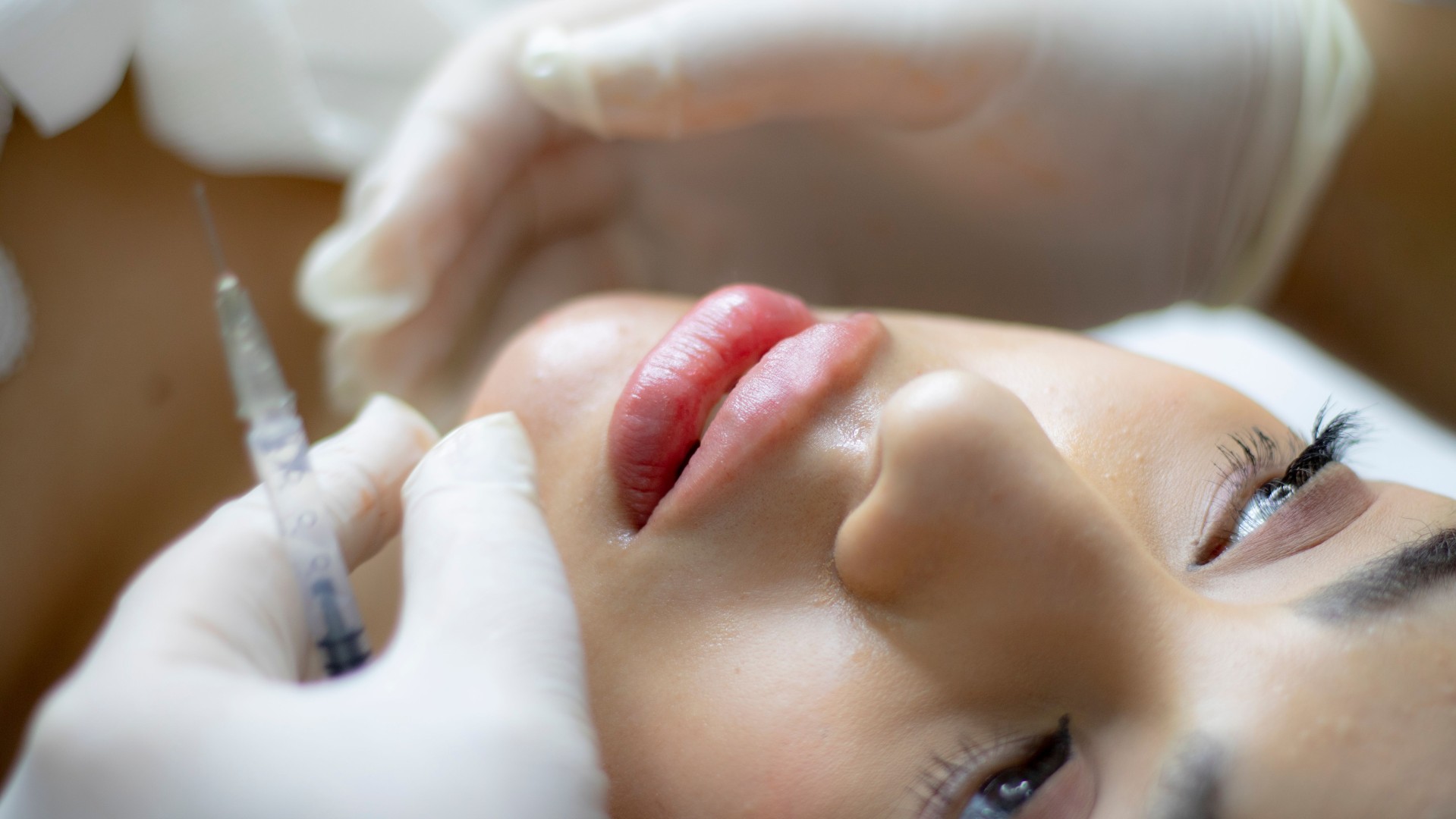
For The Face Lab founder Nurse Joanna Auguste, great aesthetic care starts with understanding the person behind the face.
When we think about treatments like Botox, hyaluronic acid filler injections, or other procedures that fall under the umbrella of medical aesthetics, mental health probably isn’t the first thing that comes to mind. We tend to associate these treatments with smoother skin, refreshed features and the pursuit of youth and beauty. But what happens when the desire to look better is connected to something deeper, even darker, and how can practitioners distinguish between a patient looking to feel more confident and one chasing an ideal that is impossible to achieve?
For Nurse Joanna Auguste, founder of The Face Lab in downtown Toronto, these questions are an essential part of providing responsible, patient-centred care.

Known for her expertise in minimally invasive and non-invasive facial rejuvenation, Joanna approaches aesthetic medicine with an understanding that goes beyond the treatment itself. Before entering the field, she was educated, trained and practised as a Primary Health Care Nurse Practitioner, building on 17 years of diverse nursing experience. Some of those formative years were spent working in mental health, an experience that continues to shape her philosophy today.
Why Mental Health Matters
“I started my nursing career in 2008, and one of my first jobs was working in community mental health in Toronto’s east downtown core,” Joanna shared. “It was difficult and challenging work, but incredibly rewarding. It taught me very early on about the connection between physical and mental health, but also how social and systemic factors influence someone’s overall well-being.”
That early experience gave Joanna a perspective that continues to inform her work in medical aesthetics. While the settings may be different, the importance of understanding individual circumstances and approaching each person without judgment remains the same. “As a nurse, it required me to be creative, down-to-earth, flexible, adaptable, open-minded and, most importantly, non-judgmental. Those skills have carried directly into my work in medical aesthetics. Aesthetic medicine is closely connected to how people see themselves, so understanding the person sitting in front of me, not just the treatment they are asking for, is an important part of how I practise.”
At The Face Lab, that philosophy translates into a holistic approach that combines advanced aesthetic techniques with an appreciation for the emotional and psychological factors that can influence a patient’s decisions. Joanna is known for her expertise in delivering natural-looking results across all skin tones, blending scientific knowledge with a commitment to thoughtful assessment and quality improvement. But just as important as the treatments she offers is the way she helps patients understand what they hope to achieve.
“We try to take a strength-based approach,” Joanna explained. “Instead of only asking, ‘What do you dislike or want to fix?’ we also focus on what someone likes about themselves and how we can bring more of that forward.” That shift in perspective begins with the very first consultation. Rather than allowing a conversation to centre exclusively on perceived flaws, Joanna encourages patients to recognize the features they already appreciate.
“My favourite question in a consultation is asking patients, what do they love about their face?” Joanna shared. “Most people have never really been asked that question. Mental health awareness also helps us recognize when patients may start to get lost in treatments or feel pressure to continually do more. Creating an open, non-judgmental environment allows people to talk about their insecurities, but also their hesitation about treatment.” It is a deceptively simple question, but one that can change the direction of a conversation. By making room for self-appreciation alongside aesthetic goals, practitioners can better understand a patient’s motivations and identify when expectations may need to be explored more carefully.
Knowing When to Say No
The pursuit of a “perfect” appearance can become a slippery slope, particularly when body image concerns begin to influence how someone sees themselves. In some cases, body dysmorphic disorder (BDD), a mental health condition involving significant distress over perceived flaws in one’s appearance, can complicate the decision to pursue aesthetic treatments. External pressures and major life events can also influence how people feel about their appearance and the choices they make.
A special occasion, for example, can place an extraordinary amount of emphasis on looking one’s best. Weddings are a particularly common example, with expectations around photographs, social media and the desire to look perfect adding to what is already a stressful time.
“A common example is someone preparing for their wedding. There can be enormous pressure to look perfect, often during an already stressful time,” Joanna said. “I remind patients that this may not be the time to make major aesthetic decisions they could regret.” Sometimes, the best advice has little to do with a syringe or a treatment plan. “Sometimes a really great makeup artist is exactly what you need for that day,” Joanna added.
Recognizing when anxiety may be driving a decision helps guide how Joanna and her team approach these conversations. Rather than dismissing a patient’s concerns, they can acknowledge the desire to look and feel their best while encouraging a more measured approach to treatment. “Of course, we can help someone look and feel their best, but we prefer to focus on glowing skin for your big day and tell people to revisit other treatments after if they still want to proceed.”
This thoughtful approach is supported by screening and assessment practices designed to identify when additional consideration may be needed before treatment begins.“We include a pre-screening for body dysmorphic disorder,” Joanna said. “It is not a diagnostic tool, but it helps to flag patients who may be at higher risk and indicate when we need to explore their concerns more carefully before proceeding. It is also important to state the obvious: medical aesthetics attracts people who are highly focused on appearance, and concerns around body image can exist among both patients and providers. That makes appropriate screening, assessment and awareness particularly important in our industry.”
For Joanna and her team, the stakes are high. Aesthetic treatments can produce visible results, but they cannot necessarily address the emotional concerns that may be driving someone to seek them out. Without a clear understanding of a patient’s motivations and expectations, even a technically successful procedure can fall short.
“One of the biggest risks is treating the wrong problem. You can technically perform a beautiful treatment and still have an unhappy patient because the underlying issue was never something an aesthetic procedure could resolve. That can lead to repeated treatments, escalating interventions and someone continually chasing an outcome that may never make them feel better.”
This is where Joanna returns to a principle she considers essential to ethical practice: the “art of saying no.”

“As providers, we have to be comfortable recognizing when we should not intervene. Sometimes the safest, most ethical treatment is no treatment.” It is a perspective that challenges the assumption that good service always means giving a client what they ask for. In medical aesthetics, responsible care sometimes means slowing down, asking more questions or recommending that a patient reconsider their plans. The ability to recognize when a procedure is unlikely to help is just as important as knowing how to perform it.
Raising the Standard of Aesthetic Care
When asked what changes she would like to see in the relationship between mental health and medical aesthetics, Joanna’s answer is as thoughtful as it is cautionary. For her, improving the industry means placing greater emphasis on the decision-making process that takes place before a treatment begins.
“I would like to see better screening, assessment and consultation become standard parts of medical aesthetics. We spend a tremendous amount of time teaching practitioners anatomy, injection techniques and devices, but patient selection and knowing when not to treat are equally important clinical skills.”
Joanna is also taking steps to bring this conversation to a wider audience of practitioners, sharing an approach she hopes more professionals will embrace. “Last fall, I presented at the Canadian Society of Aesthetic Specialty Nurses conference in Toronto on what I call the ‘Art of Saying No.’ It is something I feel strongly about and try to share with other providers. Ultimately, strengthening our industry is not just about becoming better at performing treatments. It’s about the moral and ethical imperative to become better at recognizing when a treatment is not in someone’s best interest. I have plans in the near future to create some courses around consultation and assessments, as it’s certainly a gap in our industry.”
Her plans reflect a broader commitment to raising standards in a field where technical skill is only one part of the equation. Effective consultations, appropriate patient selection and an understanding of the psychological factors that influence aesthetic decisions all play a role in creating a safer, more responsible patient experience.
Passionate about reducing the stigma surrounding aesthetic treatments, Joanna believes that helping people feel good about themselves should never come at the expense of their well-being. Her training with renowned North American leaders in aesthetic medicine has helped solidify her reputation as one of Toronto’s sought-after practitioners, but it is her commitment to thoughtful, individualized care that defines her approach.
Ultimately, the conversation around mental health and medical aesthetics is about more than looking good. It is about understanding why we want to change something, recognizing when those desires are shaped by pressure or insecurity, and making informed decisions that support our overall well-being. Self-care can certainly include aesthetic treatments, but it should also leave room for self-acceptance.
For Joanna, the real measure of good aesthetic care isn’t simply the result seen in the mirror. It is whether the treatment is right for the person receiving it in the first place. Sometimes that means helping a patient achieve a result they will love. And sometimes, it means having the compassion and clinical judgment to say no.
To learn more about The Face Lab or to book a consultation, visit the clinic’s website.
*header photo by Youssef Labib for Pexels
Nadia Elkharadly
Latest posts by Nadia Elkharadly (see all)
- More Than Skin Deep: The Importance of a Mental Health Focused Approach To Medical Aesthetics - October 14, 2026
- Living With It – a new album and a conversation with Thea May - September 23, 2026