
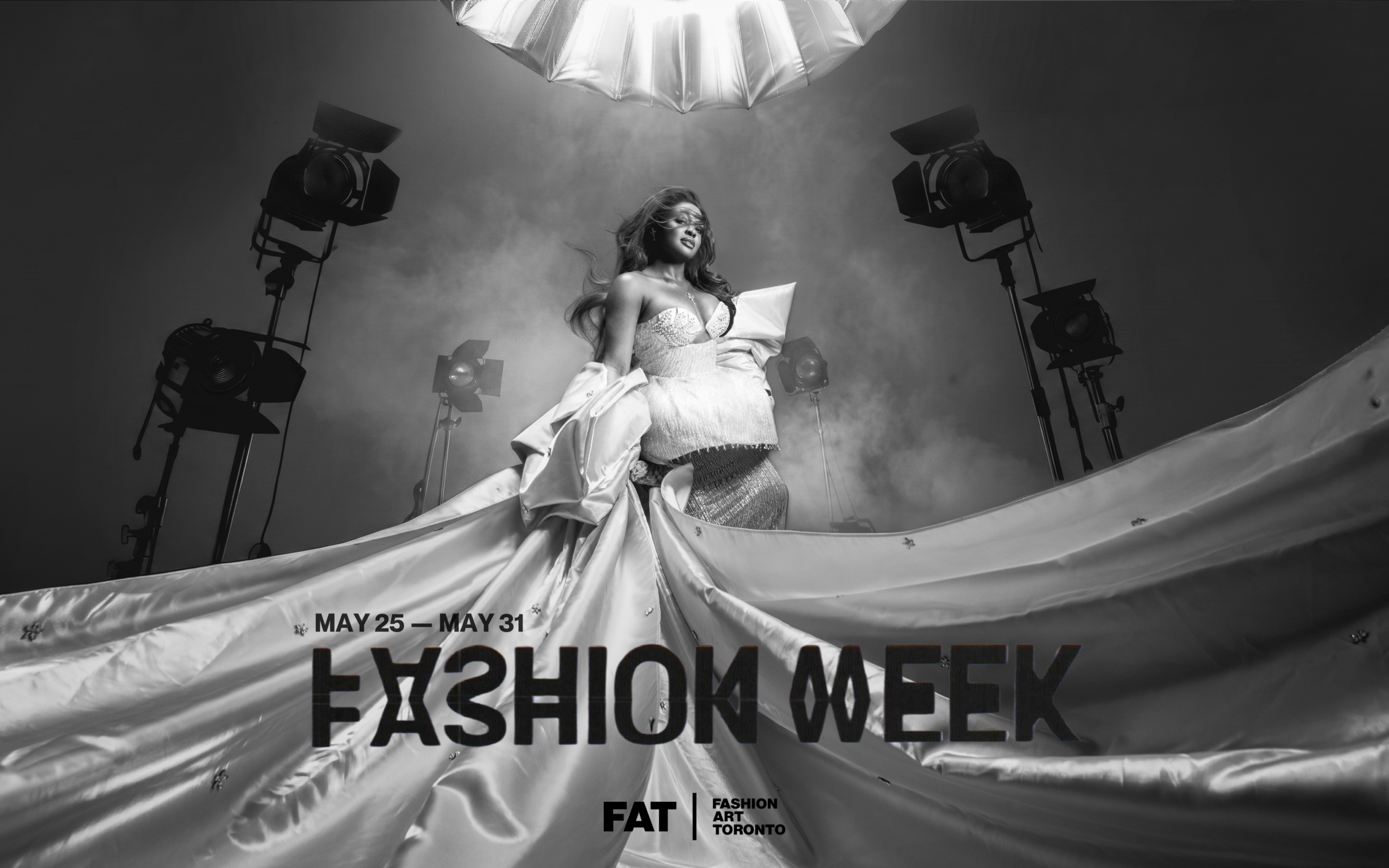
Spring has sprung in Toronto and all over the city all the most beautiful fashions will be in bloom for Fashion Art Toronto (FAT). Founded in 2005 by designer and creative visionary Vanja Vasic, FAT is Canada’s longest-running independent fashion week and a multi-arts non-profit, created to provide an inclusive, accessible space for creatives to express themselves through fashion, art, and cultural production. For SS26, this season launches the theme Toronto, Show Yourself — a bold call for visibility, confidence, and pride across the city’s fashion community,
For nearly two decades, FAT has served as a cultural engine for Canadian fashion: supporting emerging and established designers, fostering interdisciplinary collaboration, and building creative infrastructure that prioritizes representation, experimentation, and access. FAT’s SS26 programming will be running from May 25–31, 2026, and will showcase than 50 designers and a city-wide series of runway shows, exhibitions, and public activations. Highlights of upcoming shows include the Maison Perrier Fashion Week opening party on Sunday, May 24th, and landmark takeover of the former Hudson’s Bay / Saks Fifth Avenue flagship location for multiple fashion shows throughout the week. FAT will be transforming the iconic third floor into THE (SHOW) ROOM; a large-scale luxury retail takeover and cultural marketplace featuring 100+ Canadian brands and fashion institutions. THE (SHOW) ROOM programming launches wit runway presentations by Charles Lu and L’Uomo Strano on May 25th. Charles Lu will deliver a two-part experience, with a live behind-the-scenes fashion performance followed by a retrospective runway show spanning his career. L’Uomo Strano will present a powerful collection responding to anti-trans discrimination, using fashion as a platform for visibility and resistance.


As FAT’S Founder and Executive Director, Vanja Vasic has helped shape Toronto’s fashion identity, working to position the city as a global fashion capital where creativity, diversity, and innovation thrive. Over the past two decades She has collaborated with major cultural institutions and creative partners to elevate fashion as an art form and to create new spaces where designers and artists can experiment, take risks, and be seen.
We got the chance to connect with Vanja ahead of the event series launch this weekend to learn all about the inspiration, vision and future of FAT. Take a read below.
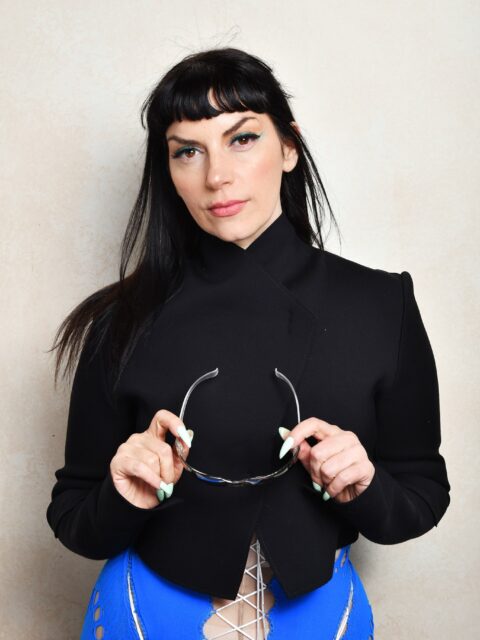
Tell me about how FAT came about?
Fashion Art Toronto really came out of my own love of both fashion and art. I studied fashion design at Toronto Metropolitan University, and during an exchange in London I was exposed to a fashion scene that felt so bold, experimental, and unapologetic. When I came back to Toronto, I felt there was space for something different here, something less traditional, more inclusive, more artistic, and more connected to the creative energy of the city.
I started FAT in 2005 as an alternative platform for designers and artists who were pushing boundaries. It was never just about clothes on a runway. It was about identity, performance, culture, community, and creating a space where people who did not always feel represented in the fashion industry could be seen.
FAT (Fashion Art Toronto) has become a defining platform for avant-garde and independent fashion in Canada—how would you describe its original vision, and how has that vision evolved over the years?
The original vision was to create a space where fashion could be experimental, theatrical, political, emotional, and artistic. I wanted FAT to be open to designers who were not necessarily part of the mainstream industry, but who had something powerful to say through clothing.
Over the years, that vision has evolved into something much larger and more ambitious. FAT is still rooted in avant-garde and independent fashion, but today it functions as a broader cultural platform and ecosystem for creative growth. We now present runway shows, art installations, performances, retail experiences, panel discussions, city-wide activations, and collaborations with major cultural institutions across Toronto. What began as an alternative runway platform has grown into a movement that is helping shape the identity of Canadian fashion.
What feels especially important now is that we are not only focused on visibility, but on building systems and opportunities for designers to actually grow sustainable careers and businesses. We are thinking more deeply about mentorship, international exposure, creative development, market access, and how Canadian designers can compete and thrive on a global scale.
A big part of that evolution is our Bridge to Berlin initiative, which is focused on creating pathways for Canadian designers to connect internationally through export opportunities, cultural exchange, and global visibility. We want local designers to grow both locally and internationally, while also strengthening the global perception of Toronto and Canadian fashion as a whole.
At the same time, FAT itself is expanding. We are evolving into a true city-wide fashion week, activating unexpected spaces across Toronto and working closely with museums, cultural institutions, hospitality partners, and public spaces to bring fashion into broader cultural conversation. There is a real energy building right now around Toronto fashion – a confidence, a maturity, and a stronger sense of identity.
Toronto Fashion Week has gone through multiple reinventions—how do you see FAT’s role in shaping or complementing the city’s fashion ecosystem?
FAT has always existed slightly outside the traditional fashion week model, and I think that is our strength. We were never trying to replicate New York or Paris – we wanted to build something that felt true to Toronto: diverse, multidisciplinary, independent, and culturally layered.
What makes FAT unique is that it grew completely grassroots, shaped by community long before large sponsorships or institutional support entered the picture. Because of that, it developed very organically into a platform that truly reflects the city and its creative communities.
I think FAT’s role within Toronto’s fashion ecosystem has been to expand the definition of what fashion week can be. We have always championed emerging designers, experimental work, alternative beauty, and cultural diversity in a way that reflected the real Toronto. Long before inclusivity became an industry conversation, our runways featured different body types, gender expressions, cultures, and artistic perspectives because that was simply our reality and our values.
Today, FAT has evolved into a city-wide fashion week that connects fashion with art, performance, music, nightlife, retail, and cultural institutions across Toronto. We create space not only for established designers, but for photographers, stylists, performers, models, filmmakers, and creative entrepreneurs to grow alongside the industry.
I think FAT has helped shape Toronto’s fashion identity by proving that fashion here does not need to fit a traditional mold to be globally relevant. Our strength comes from our creativity, our diversity, and our sense of community, and that is exactly what makes Toronto exciting right now.
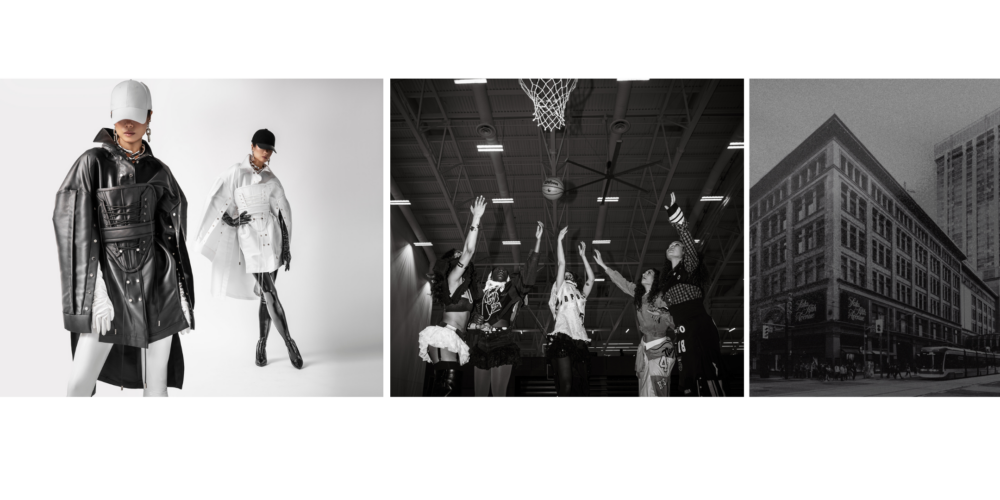
Do you think Toronto is finally gaining recognition as a global fashion city, or is there still work to be done?
I think Toronto is absolutely gaining recognition and people are very interested in the city, but there is still work to do. The talent is here. The diversity is here. The creativity is here. What we need is more infrastructure, more investment, more media attention, and more confidence in our own fashion identity.
Toronto has such a unique point of view because it is shaped by so many cultures, communities, and creative disciplines. We do not need to copy other fashion capitals. We need to show the world who we are. That is really the spirit behind our current theme, “Toronto, Show Yourself” is about visibility, pride, and claiming our place on the global stage.
Supporting emerging designers has always been central to FAT—why is that commitment so critical right now?
Emerging designers are the future of fashion, but they are also the most vulnerable. It is expensive to produce collections, stage shows, create content, access media, and build a brand. In Canada especially, designers often have to be incredibly resourceful and wear many hats.
Supporting them right now is critical because the industry is changing so quickly. Designers are not only making clothes, they are telling stories, building communities, exploring sustainability, challenging gender norms, and creating new ways of thinking about identity. FAT gives them visibility, professional production, media exposure, and a community around them. Sometimes that support can be the thing that helps a designer take the next step.
FAT has always blurred the line between fashion and art—how do you personally define “fashion as art”?
For me, fashion becomes art when it carries meaning beyond function. Clothing can express emotion, identity, politics, fantasy, history, rebellion, beauty, and belonging. A garment can be a sculpture. A runway can be a performance. A collection can be a personal or cultural statement.
Fashion is one of the most intimate art forms because we live in it. We wear it on our bodies. It changes how we feel, how we move, how we are seen, and how we see ourselves.
With institutions like The Met increasingly spotlighting fashion exhibitions, do you feel the industry is finally being taken seriously within the fine art world?
Yes, I think fashion is increasingly being recognized as a serious cultural and artistic form. Major museum exhibitions have helped shift public perception, but designers and artists have always understood that fashion holds deep creative and cultural value.
What is exciting now is that more people are beginning to see fashion as a language. It tells us about class, gender, identity, culture, history, labour, technology, beauty, and power. At FAT, we have always approached fashion that way, not as something superficial, but as a reflection of who we are and where society is going.
At the same time, I still think there is work to be done, especially in Canada, when it comes to institutional and governmental recognition. Fashion exists at the intersection of art, culture, design, and industry, but many designers still struggle to access the same kinds of public arts funding and cultural support that artists in other disciplines receive. If we truly recognize fashion as an important cultural art form, then we also need to invest in the people creating it. Supporting designers means supporting cultural identity, creative innovation, storytelling, and the future of Canadian culture itself.
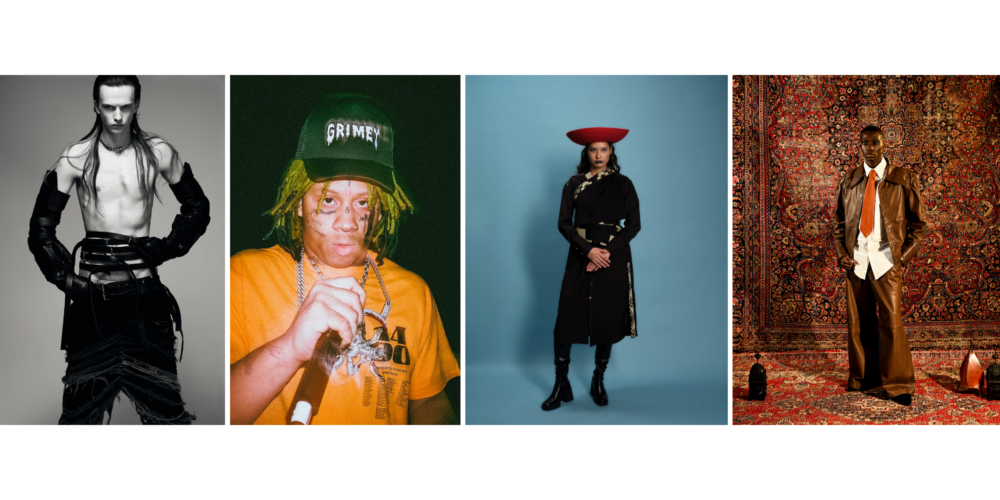
What legacy do you hope FAT leaves, both within Toronto and on the global fashion stage?
I hope FAT’s legacy is that we helped open doors. That we created a platform where people felt seen, supported, and free to express themselves. I hope designers look back and feel that FAT gave them a meaningful place to begin, grow, experiment, and connect.
I also hope FAT is remembered for changing the way fashion can be presented and experienced. We challenged the traditional fashion week formula by making it more multidisciplinary, community-led, inclusive, and culturally connected. We brought fashion into conversation with art, music, performance, film, nightlife, and public space, and helped create a model that felt more reflective of the world and the city around us.
For Toronto, I hope FAT contributes to the city being recognized as a serious global fashion capital, not because we copied anyone else, but because we built something rooted in our own identity and creative communities. I believe FAT has had a real impact on Canadian fashion by giving independent designers visibility, professional opportunities, and a platform to grow at a time when few spaces existed for them.
Globally, I hope FAT is remembered as a platform that championed fashion as art, community, diversity, and cultural dialogue. Fashion should not be about exclusivity. It should be about expression, belonging, imagination, and creating space for new voices and perspectives to emerge.
To Buy Tickets: Tickets will be available during the week of the show, from May 25–31, through the Fashion Art Toronto website. Guests can visit the event schedule page to purchase tickets and view show details. Buy Tickets: here
https://www.fashionarttoronto.ca/
Nadia Elkharadly
Latest posts by Nadia Elkharadly (see all)
- More Than Skin Deep: The Importance of a Mental Health Focused Approach To Medical Aesthetics - October 14, 2026
- Living With It – a new album and a conversation with Thea May - September 23, 2026