
On Humanimal, released October 25, The Beatroot Road continue their pursuit of wide-open, cross-cultural creativity. The album is a 10-track exploration of what the group calls “post-genre” music: a blend of global influences, experimental production choices, and dance-driven rhythms that challenge easy categorization. While adventurous in scope, Humanimal maintains a cohesive emotional core—one that reflects both the band’s international makeup and their commitment to finding common ground in an increasingly polarized world.
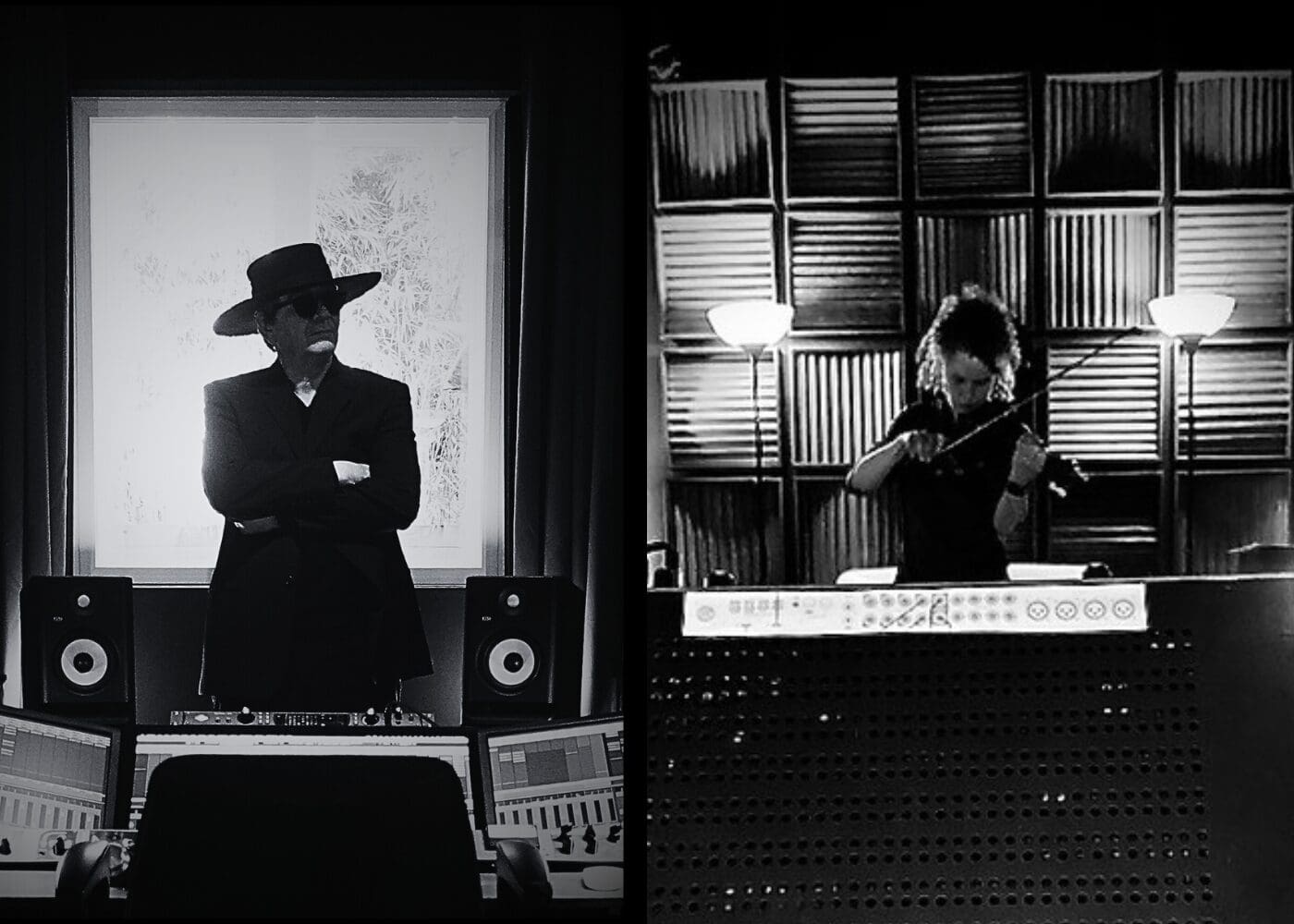
At the centre of The Beatroot Road are percussionist Mark Russell and violinist Hazel Fairbairn, two artists whose nomadic histories inform the project’s genre-bending character. Russell grew up in Khartoum before moving to Scotland, where he absorbed African, Caribbean, and Celtic drumming alongside the rock traditions that shaped his early career. He took his first gig at 15—after lying about his age to buy a drum kit—and eventually built a résumé that spans Celtic dance music, North American and European touring with the EDM-fusion group Horace X, and collaborations with figures such as Lee “Scratch” Perry, Dennis Bovell, and Ewan MacColl & Peggy Seeger. After years of feeling at home on tour across Canada, he finally settled in Vancouver, a city whose cultural hybridity mirrors his own.
Fairbairn, meanwhile, began in classical violin before turning toward Celtic fiddle and eventually completing what is believed to be the first PhD on Irish pub music at Cambridge University. Her studies with South Indian violinist Chandru further broadened her technique, and her tenure with Horace X introduced her to Romani and Cajun styles. Since relocating to British Columbia, she has expanded the violin’s sonic palette with electronic effects, contributed to immersive audio projects, taught music technology, and scored films by poet Kim Trainor. Together, Russell and Fairbairn form the rhythmic and textural backbone of The Beatroot Road.
The wider collective behind Humanimal includes seasoned contributors from Austria, Canada, China, Kenya, Korea, Moldova, Nigeria, Punjab, Türkiye, the UK, the US, Jamaica, and Venezuela—an evolving roster that mirrors the project’s borderless ethos. As The Big Takeover Magazine has described it, The Beatroot Road’s work is “a genre-defying journey that’s as emotionally grounded as it is sonically ambitious.”
Despite its global reach, Humanimal isn’t presented as “world music” in the traditional sense. Instead, it reflects the lived reality of artists who have grown up with overlapping influences and resist easy placement along cultural or ideological lines. The album takes what the band calls “sideways looks” at various facets of the human condition—love, anger, joy, wisdom, belonging—often through layered arrangements that pair unexpected instruments and styles. Beneath the experimentation lies an accessible core driven by a left-field rhythm section built from bodhrán, rhythm fiddle, bass, and organ.
All performances were recorded by human musicians—without auto-tune—across 13 countries. Russell oversaw the final editing and processing at Laboratory X Studio near North Vancouver, lending a consistent sonic identity to an otherwise expansive collaborative process.
The title track, “Humanimal,” imagines how an artificial intelligence might assess humanity, celebrating the complexities—flaws included—that distinguish human creativity from algorithmic output. Midway through the record, a direct appeal to young artists challenges them to resist homogenization and protect originality in an era of increasingly standardized music production. The album closes with “Payday,” a meditation on meaning and purpose delivered with the project’s characteristic blend of grit and warmth.
In a moment when technological innovation often overshadows its limitations, Humanimal positions itself as a reminder of the irreplaceable value of human expression. It’s a record that dances and argues, reflects and provokes—an ode to the stories, contradictions, and shared experiences that connect people across borders and genres.
Nadia Elkharadly
Latest posts by Nadia Elkharadly (see all)
- More Than Skin Deep: The Importance of a Mental Health Focused Approach To Medical Aesthetics - October 14, 2026
- Living With It – a new album and a conversation with Thea May - September 23, 2026