
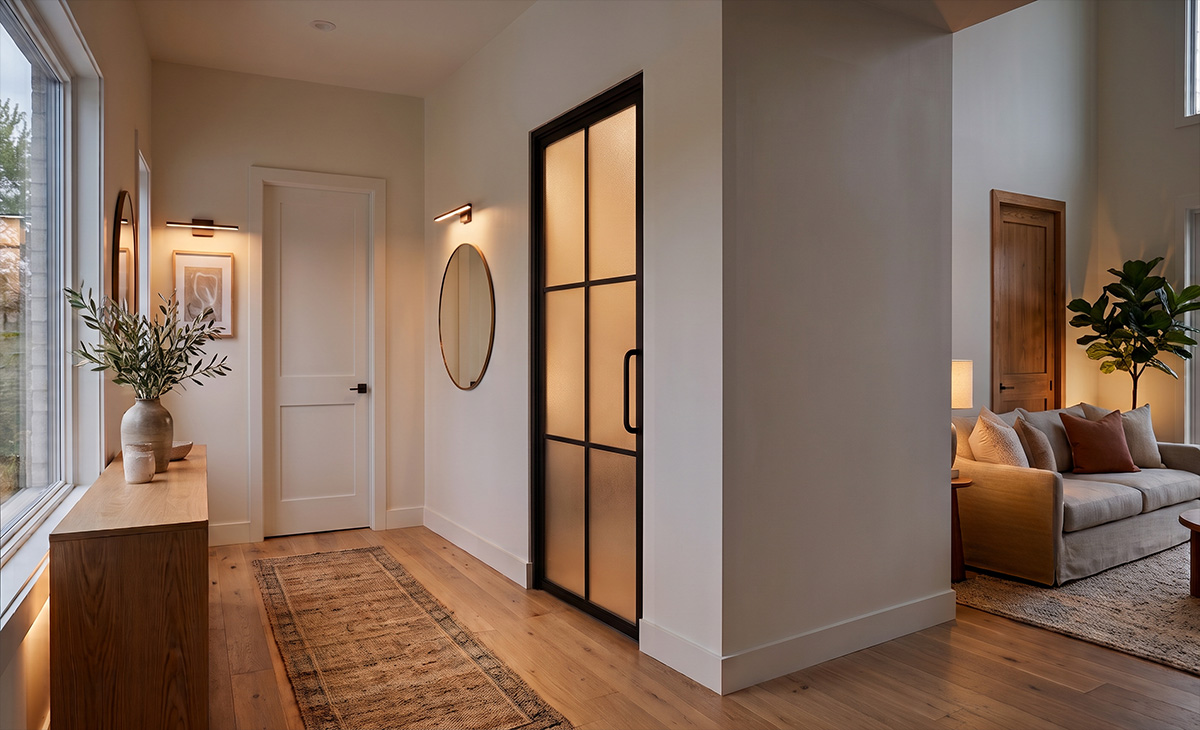
In the past, picking out stylish interior home doors was not a priority; it was an afterthought, something you picked at the last minute after paint and flooring were already sorted. Nowadays, that has changed. Doors are now seen as a real design element, one that can shape the home’s aesthetic while also affecting natural light, privacy, and how easily you move from room to room.
Homeowners and designers alike are starting to treat doors as architectural features rather than something to fill a gap in the wall. Industry surveys back this up too, showing a growing demand for minimalist profiles, glass doors, and hidden or flush designs that blend right in rather than standing out. These preferences are shaping some clear trends worth knowing before your next door upgrade.
Why Interior Home Doors Matter More Than Ever
Although most of us look at interior home doors as just background details, they carry a lot of load when it comes to the home’s overall style. From the finish and shape to the hardware you choose, they can either blend seamlessly with the rest of the home’s decor or stick out in a way that throws off the whole aesthetic.
Visual continuity plays a big part in this. When doors share a consistent style throughout a home, the eye moves naturally from room to room instead of catching on mismatched trim or clashing finishes. That kind of cohesion is one of the easiest ways to make a home feel intentional rather than pieced together randomly, over time.
Beyond just the aesthetics, doors are also getting smarter functionality. Better hardware, smoother mechanisms, and space-saving designs like pocket and sliding doors mean homeowners no longer have to choose between practicality and style. This combination pays off financially, too. Well-chosen doors add a polish that buyers notice, which makes them a small but meaningful factor in property value.
All of this reflects a broader shift happening in home design right now. People are done treating doors as an afterthought and are instead choosing them with the same care they’d put into flooring or lighting. That shift in mindset is exactly what’s driving the trends shaping 2026, so let’s get into them!
Minimalist Flush Doors Continue to Lead
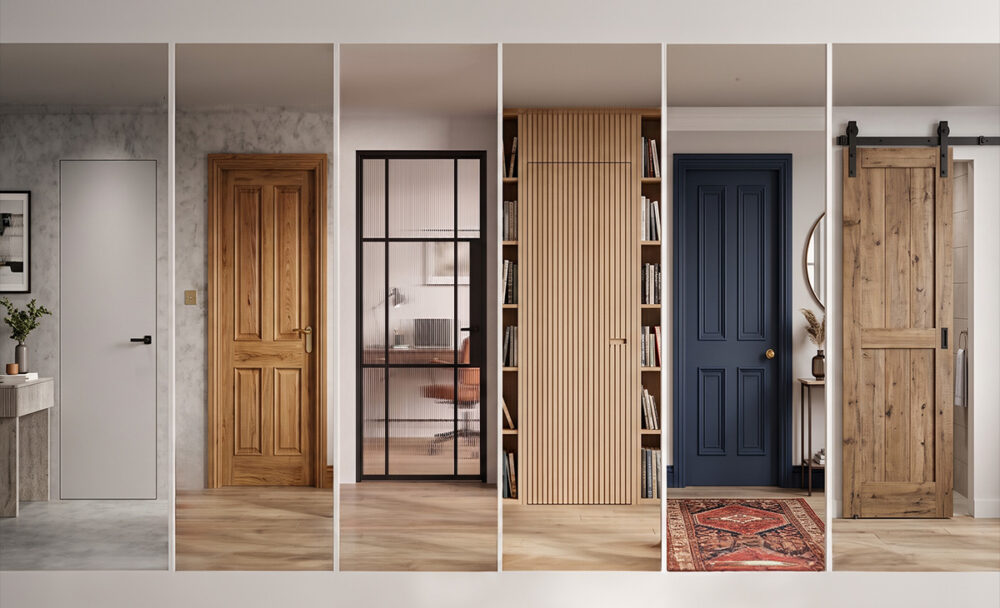
Flush doors remain one of the biggest trends in 2026, and it’s easy to see why. Their clean lines and flat-panel slab design give a room a seamless modern appearance, with no panels, grooves, or trim to break up the surface. That simplicity is exactly what makes them so versatile.
Matte finishes have become the go-to pairing for flush doors, adding a soft, understated look that avoids the glare or shine of glossier options. The combination fits contemporary homes especially well, where the goal is usually a clean, uncluttered aesthetic throughout.
Industry professionals have flagged flush doors as one of the leading choices, and the appeal makes sense. They’re subtle enough to blend into almost any modern interior, while still giving a room a polished, put-together feel, proof that small upgrades can make a home feel more luxurious without a major renovation.
Warm Natural Wood Finishes Replace Cool Gray
For years, people opted for cool gray interior tones, but that’s starting to shift fast. Homeowners are moving toward warmer, natural wood finishes that feel softer and more inviting than the stark, monochrome look that’s been everywhere.
White oak and ash are leading this shift, both known for their light, subtle wood grains that add texture without overwhelming a room. Walnut is showing up too, bringing a richer, deeper tone for homeowners who want something a bit bolder while staying in that natural wood family.
What ties these together is a move toward organic textures over flat, uniform surfaces. Visible grain patterns and slight variations in tone give doors a sense of character that a solid gray slab just can’t match. It’s part of a broader trend toward clean minimalism, but with enough natural warmth to keep a space feeling lived in rather than sterile.
For homeowners thinking about their doors, this shift is an easy way to soften a home’s overall atmosphere without touching the layout or furniture at all.
Glass Interior Doors Bring in More Light
Glass panel doors continue to be one of the biggest trends in interior design, and for good reasons. They let daylight pass between rooms while simultaneously creating a sense of division, so you can enjoy separation without losing that open feel. Clear glass is a great choice for spots where privacy isn’t a priority, like dining rooms, where the goal is more about keeping the space feeling open and connected.
Another popular pick is frosted glass. Frosted panels diffuse light without giving full visibility, ideal for spaces that need a bit more privacy, like home offices. For a neat middle ground between clear and frosted glass, you can opt for reeded glass that adds texture and visual interest while still letting daylight seep through.
Most people choose black metal frames as the finishing touch for most of these glass doors. That contrast adds an industrial edge, making them stand out without overshadowing the room’s overall aesthetic.
Simply put, glass doors can solve a problem a lot of homes have: how to divide space without making it feel smaller or darker. That’s exactly why this trend is not going anywhere anytime soon.
Hidden and Frameless Doors Create a Seamless Look
For homeowners who want a clean, uncluttered look, hidden doors are the go-to solution. Also called invisible doors, they’re designed to blend right into the wall using the same paneling, paint, or finish, so the door practically disappears when closed instead of interrupting the flow of the room or eating up visual space with a bulky frame.
Concealed hinges are a big part of what makes this work. Without any visible hardware breaking up the surface, the wall looks like one continuous plane rather than an obvious doorway. Pair that with a frameless design and the door integrates into the wall almost seamlessly, with no trim or casing to give it away.
This look often shows up in luxury homes and modern architecture, where minimalism is the whole point. Hidden doors allow a home to stay visually uncluttered and feel more spacious, while still giving rooms full separation and privacy whenever needed. It’s proof that you don’t have to sacrifice function for a clean look.
Statement Colors and Custom Finishes
Not every trend is about being able to blend in. Statement colors are having their moment too, with homeowners using doors as a way to add personality without touching the layout or furniture at all.
Deep charcoal, forest green, navy, and black are leading the change, offering a bold contrast against lighter walls and trim. For a softer alternative, you can choose earthy neutrals. These shades have more depth than plain white but aren’t quite as dramatic as a deep navy or black.
Color drenching, painting the door and its surrounding trim or even the wall in the same shade, is also becoming popular. It creates a cohesive, immersive look that makes a small space feel intentional rather than just decorated.
Of course, one of the easiest ways to add personality to a home without a full renovation is to paint the doors. A single door in the right shade can shift the whole feel of a room, and it’s the kind of project where picking up some contractor skills pays off, since it only takes a DIY weekend, not a full remodel.
Functional Features Take Priority
Choosing a door based on its style is not a bad thing. But completely ignoring its functional features is where the problem begins. Soundproof doors are a big part of this, especially as more people work from home and need real separation between a quiet workspace and the rest of the house. Soft-close hardware is another small but popular upgrade, eliminating jarring slams and making a home feel a bit more refined day-to-day.
Sliding doors are great space-saving solutions, as they do not need a swing radius to open and close. This way, they free up floor space that a traditional door would otherwise claim, which matters a lot in smaller homes or tight layouts.
With remote and hybrid work now the norm for so many people, a door that actually blocks sound and closes off a space completely has become less of a luxury and more of a necessity. The same goes for multi-purpose rooms, guest rooms doubling as offices, playrooms doubling as studies, where a good door needs to adapt to whatever the room is being used for that day.
All of this ties back to how lifestyles have changed. Homes need to flex in ways they didn’t before, and functional door features are one of the simplest ways to make that flexibility possible.
How to Choose the Right Interior Home Doors
There are many trends you can consider, as these trends can help you narrow things down. It’s always a good idea to start with your home style. A flush door suits a modern build, while a paneled or shaker style fits better in a traditional home. So it is worth choosing something that will complement what’s already there rather than fight against it.
On the other hand, room function matters just as much. A home office might call for a soundproof or frosted glass door, while a dining room could handle something more open, like clear glass or a wide sliding door. Material also plays into this; solid core doors offer better sound reduction and durability, while hollow options are lighter and more budget-friendly for lower traffic areas.
Budget and maintenance go hand in hand, and planning a DIY project or renovation around your budget and lifestyle makes this decision a lot easier. A higher upfront cost for quality materials often means fewer repairs and replacements down the line. Thus, it is worth weighing the long-term picture rather than just paying attention to the price. At the same time, consider light versus privacy for each room individually. A glazed door can work well in hallways that need brightening, but probably is not the best choice for bedrooms.
Above all, you should aim for long-term durability. Trends shift, but a well-made door in a timeless style will outlast whatever’s popular that year.
Conclusion
Looking at all these trends together, it’s obvious that most homeowners prefer simplicity, natural materials, better functionality, personalized finishes, and light-filled spaces. Whether it’s a flush door that disappears into a modern wall, a warm oak finish replacing cool gray tones, or a glass panel that keeps a room bright without sacrificing privacy, the common thread is intention. Homeowners want doors that do more, look better, and fit properly.
As the popularity of these trends continues to rise, it’s worth seeing interior home doors as more than just a finishing touch. They are a genuine investment, one that shapes how a home feels today and how well it holds up in the years ahead.

markmunroe
Latest posts by markmunroe (see all)
- Five Benefits of Taking a Digital Detox One Day Per Week - August 17, 2026
- Top Interior Home Door Trends for 2026 - July 31, 2026