
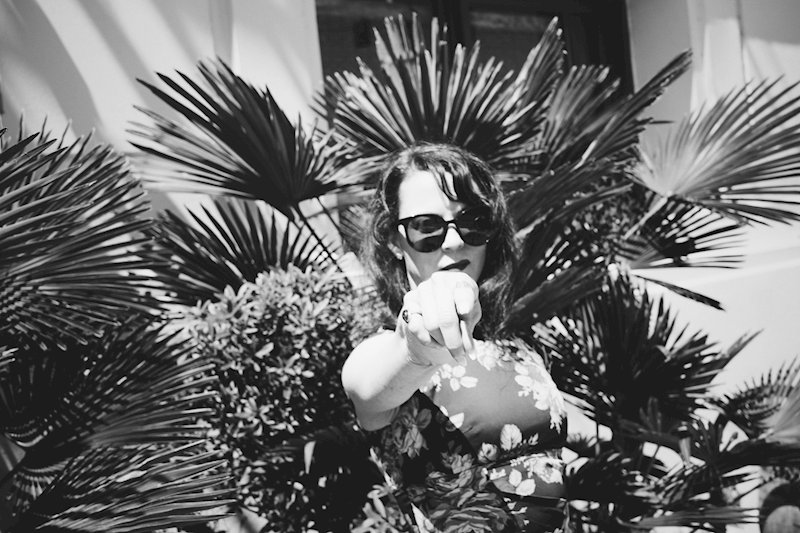
Tacoma artist SaraEllen is here with a reimagined take on “Doll Parts”, the grunge girl anthem by Hole. Released at the beginning of 2026, her version trades the raw distortion of the original for a smoky, trip-hop and jazz-inflected atmosphere that feels both reverent and exploratory.
Best known as one half of the indie jazz-pop duo Plaid Lion, SaraEllen uses her solo work as a creative laboratory. Her independent releases venture into darker, more theatrical territory that she describes as populated by “haunted houses, feminist rants, David Lynch references and general Tacoma sadgirl vibes.” In that context, “Doll Parts” becomes a natural fit.
Originally written by Courtney Love, the song’s stark lyricism has long resonated with SaraEllen. She cites the economy of its imagery, comparing it to Norwegian Wood (This Bird Has Flown) by The Beatles as a benchmark for expressive minimalism. Her interpretation began at the piano, where she experimented with reharmonization and a looser, jazz-oriented arrangement before bringing the concept to fruition.
The result is a smooth and melancholy trip-hop rendition anchored by vibey breakbeats and vintage keys. SaraEllen’s vocal performance moves between intimate crooning and controlled wailing, favoring texture and tonal nuance over the song’s original grunge abrasion. The addition of Brad Carter on baritone saxophone deepens the track’s nocturnal feel, lending a low-register warmth that contrasts with the vulnerability of the lyrics.
The song draws comparisons to artists such as Beth Gibbons of Portishead, Sade, and Annie Lennox in terms of tonal sophistication, while SaraEllen’s upper register occasionally recalls the dramatic clarity of Florence Welch of Florence + The Machine. At the same time, the trip-hop undercurrent nods toward the moody textures of Morcheeba, aligning the cover with a lineage distinct yet familiar to its grunge origins.
Produced and mixed by Sam Welch and SaraEllen, with mastering also by Welch, the recording emphasizes space and atmosphere. Where the original thrived on jagged immediacy, this version lingers in tension and introspection, reframing the song less as an explosive confession and more as a slow-burning meditation.
By recontextualizing “Doll Parts” through a jazz and trip-hop lens, SaraEllen does not attempt to replace its legacy but rather to converse with it, revealing how a spare set of lyrics can withstand, and even invite, reinvention.
Nadia Elkharadly
Latest posts by Nadia Elkharadly (see all)
- Why you need a great Vitamin C Serum in your skincare routine - April 6, 2026
- SXSW 2026: A Story in Pictures - April 1, 2026