
Children with sensory processing differences, developmental delays, or motor coordination challenges don’t make all their progress inside a clinic. A lot of it happens between sessions – in your kitchen, your backyard, your living room floor.
The 7 occupational therapy activities parents can try at home below don’t need specialized equipment or clinical training. They do need consistency, a little patience, and a willingness to follow your child’s lead. Here are seven evidence-informed activities worth adding to your weekly routine.
1. Sensory Bins for Tactile Exploration
A big part of what makes occupational therapy activities for children effective at home is their ability to replicate the sensory input a therapist would provide in a structured setting. Sensory bins do exactly that.
Fill a container with rice, dried beans, kinetic sand, or water beads. Hide small toys inside and let your child dig for them with their hands, or with scoops and spoons if direct touch feels like too much at first. The point is to gradually build tolerance for different textures.
Kids who avoid certain sensory inputs often improve with repeated, low-pressure exposure. The bin gives them control over how much contact they have, and that matters. Start with five minutes and work up from there.
One simple variation: temperature play. Try warm water one session and cool water the next. Having your child describe what they feel builds sensory vocabulary alongside the tactile work.
2. Playdough and Clay for Fine Motor Strength
Rolling, pinching, flattening, and tearing playdough are some of the most effective fine motor exercises available to parents – and children rarely notice they’re doing work.
The resistance in commercial playdough strengthens the small muscles in the hands and fingers that children need for writing, buttoning, and using utensils. For younger children or those with low muscle tone, start with a softer homemade version and increase the firmness gradually.
Give your child a task rather than open-ended play: roll 10 small balls, press a fork pattern into a flat slab, or shape letters. Structured goals keep the session purposeful without turning it into a chore.
You can also hide small objects inside the dough and ask your child to find them using only their fingers. It adds a problem-solving layer while keeping hands engaged.
3. Obstacle Courses for Body Awareness and Coordination
Body awareness – knowing where your limbs are in space – is called proprioception, and it’s something many children with developmental delays struggle with. Indoor obstacle courses train it directly.
Use couch cushions, pillows, painter’s tape lines on the floor, and tunnels made from blankets draped over chairs. Crawling, jumping, balancing on one foot, and squeezing through tight spaces all activate the proprioceptive system in ways that build coordination over time.
Keep the course short at first. Three to five stations is enough. Repeat it several times rather than adding too much too fast, repetition is what creates the motor memory.
If your child gets frustrated, change the order of the stations rather than removing them. A different sequence feels fresh without reducing the therapeutic value.
4. Dressing Practice for Self-Care Independence
Buttons, zippers, shoelaces, and snaps are legitimate fine motor challenges. Practicing them daily builds independence and the hand-eye coordination that feeds into dozens of other tasks.
One approach therapists use is a “dressing board” – a piece of cardboard or wood mounted with real clothing fasteners your child can practice on without the pressure of getting dressed on a schedule. You can make one from an old shirt stapled to a wooden frame.
Practice away from the morning rush. A calm, low-stakes moment – after dinner, during screen time wind-down – removes the anxiety that often builds around dressing tasks.
Celebrate partial success. Pulling a zipper halfway up is real progress. Children who get praised for specific effort (“you held the fabric steady that time”) are more likely to keep trying than those praised only for the final result.
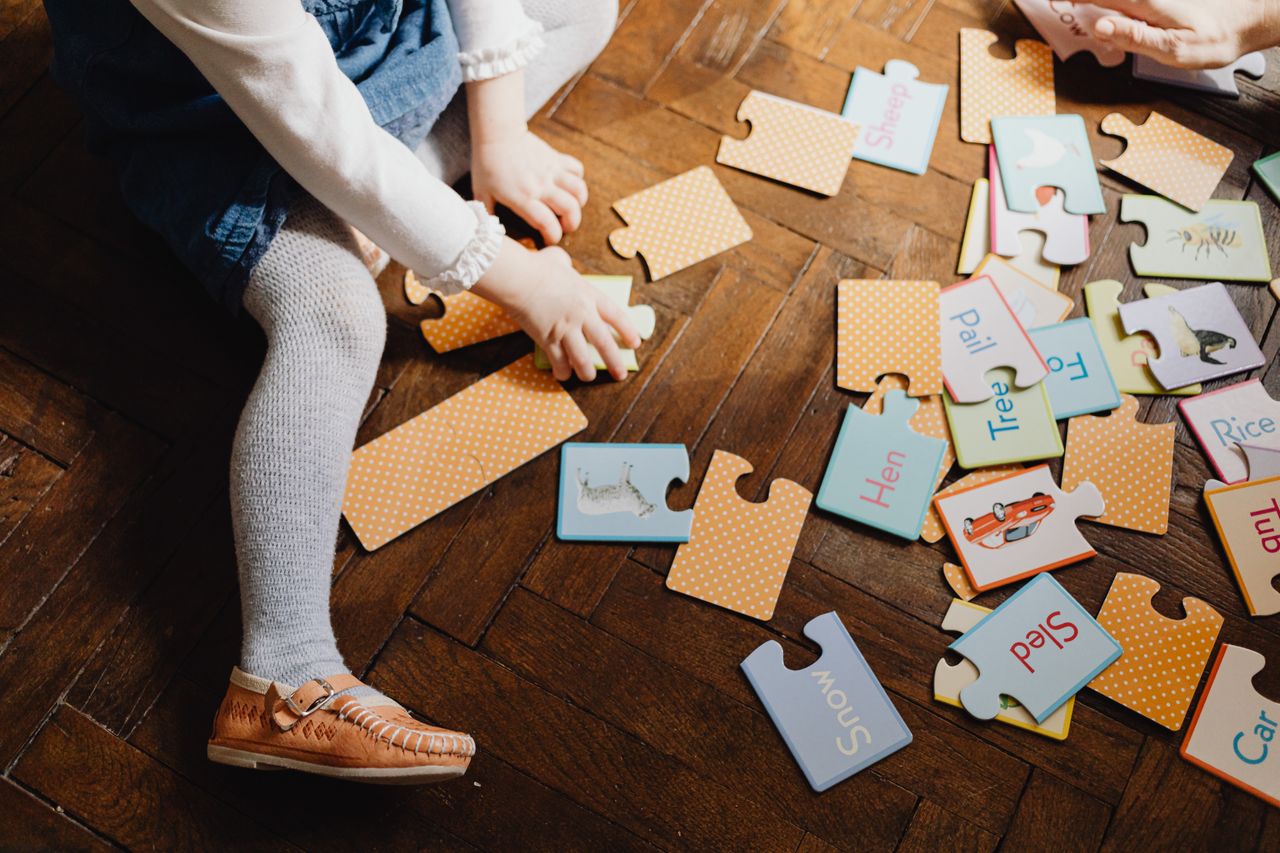
5. Puzzle and Sorting Games for Cognitive and Motor Skills
Puzzles build spatial reasoning, hand-eye coordination, and working memory at the same time. They’re one of the few activities that cross cognitive and physical development simultaneously.
For children working on fine motor skills, start with puzzles that have large, chunky knobs. As grip and control get better, move to flat interlocking pieces. Piece count matters less than the size and type of manipulation each puzzle asks for.
Sorting games serve a similar dual purpose. Sorting objects by color, shape, size, or weight trains visual discrimination and careful hand movement. Use a muffin tin and small objects – coins, buttons, different-colored pom-poms – for a low-cost version that takes two minutes to set up.
Add a timing element for older children: “how fast can you sort these by color?” Mild, self-directed challenge builds frustration tolerance alongside the motor work.
6. Breathing and Regulation Exercises
Self-regulation – the ability to manage emotional and physical responses – is a foundational skill that occupational therapy targets directly. And it’s one area where home practice has an outsized effect, since the moments that require regulation happen at home far more often than in a clinic.
Simple breathing exercises work. The “balloon breath” – breathing in slowly to inflate an imaginary balloon, then releasing with a long exhale – gives children a concrete visual to anchor the technique. Practice it during calm moments so it’s available during dysregulated ones.
For children who respond better to movement-based regulation, try “heavy work” before transitions: pushing a laundry basket, carrying a backpack filled with books, or doing wall push-ups. The deep proprioceptive input from resistance activities has a calming effect on the nervous system, according to research published by the American Occupational Therapy Association.
Consistency matters here more than duration. Two minutes of regulation practice daily builds more solid skill than a 20-minute session once a week.
7. Rhythmic Movement and Music Activities
Rhythm is closely tied to motor coordination and timing – skills that many children in occupational therapy work on explicitly. And rhythm-based activities are among the easiest to run at home without equipment.
Clapping patterns, marching to a beat, playing a simple drum with wooden spoons on pots, or dancing with specific arm movements all require the brain and body to coordinate timing together. Research from the National Institutes of Health on rhythm and motor learning supports this connection in developing children.
Start with simple two-beat patterns and mirror them back and forth with your child. Once they can match your pattern reliably, add a third beat. That gradual progression is what drives development.
Music adds an emotional layer, too. Kids who resist structured movement often join in readily when it’s tied to a song they like. That willingness is worth working with; it doesn’t make the activity any less effective.
Conclusion
The 7 occupational therapy activities parents can try at home above work because they target real developmental areas, including fine motor control, sensory processing, body awareness, self-regulation, and coordination, in ways that fit into an ordinary day. You don’t need a clinic to make meaningful progress. What you need is regular practice, low pressure, and activities matched to where your child actually is right now. Talk with your child’s occupational therapist about which of these fits their current goals, and use the sessions between visits to reinforce what they’re already working toward.
Disclaimer: At-home occupational therapy activities can help children develop everyday skills, coordination, and independence. However, activities should be adapted to each child’s needs and abilities and do not replace professional occupational therapy guidance.

Jessica Alexander
Latest posts by Jessica Alexander (see all)
- 7 Occupational Therapy Activities Parents Can Try at Home - November 27, 2026
- 4 Practical Ways to Help Children Develop Stronger Communication Skills - November 27, 2026