

“War is Peace. Freedom is Slavery. Ignorance is Strength.” That’s where Raoul Peck’s Orwell: 2+2=5 begins, superimposing Orwell’s familiar doublethink over footage that could have been pulled from this morning’s news: burning cities, campaign rallies, surveillance states, and twisted language.
There is no shortage of films trying to warn us about the state of the world. But Peck’s entry may somehow be louder, denser, and more crowded than most. He packs in crisis after crisis like a 2hr greatest-hits reel of global authoritarianism, each scene driving home the world George Orwell (narrated by Damien Lewis) warned us of is now the world we inhabit. Toronto International Film Festival’s presentation of Orwell: 2+2=5 is biography, sermon, reckoning and literary séance all in one. It sweeps from colonial Burma to January 6th to show how Orwell’s words weren’t just prophecies, they were warnings we failed to understand.
But for all the film’s urgency, Peck doesn’t let the frame breathe, even though the audience needs it. The movie is so committed to its thesis that it relentlessly compiles a century’s worth of archival clips, headlines, and literary references to preach that civilian apathy is the fuel of authoritarianism. It’s a fair assessment, but Orwell:2+2=5’s likely viewer is probably very aware they are surrounded by the general fatigue of world-collapse. This film is Peck’s call-to-arms that unfortunately reads like a funeral march.
Attempting to anchor the film to Orwell’s life journey, Peck moves quickly through the early years when Orwell was Eric Arthur Blair, in order to settle on the emotional spine of the film which begins around his political awakening in colonial Burma. It’s the layers of Orwell’s middle decades with modern footage, real-world headlines, and AI-generated images that blur the distance between then and now to challenge viewers to see the rise of authoritarianism as a continuous thread through time. While the anchoring feels brief, the message is relevant.
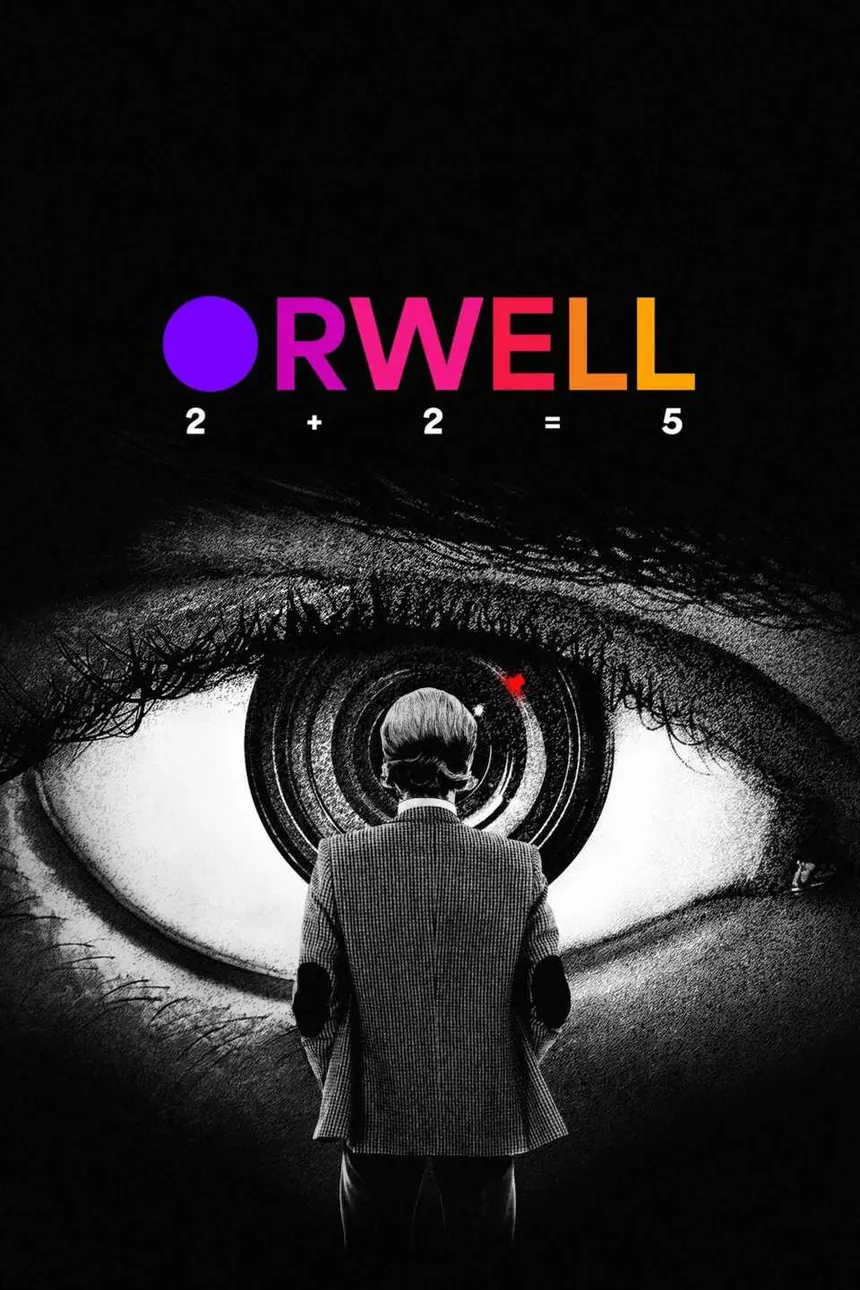
Totalitarian tenets from 1984 and Animal Farm are stitched to news reports about “peacekeeping operations” and “legal use of force,” turning Orwell’s fiction into the grammar of modern reality.
In the beginning, Peck’s relentlessness feels justified because there is a weight to the project. But this is also where the film gets trapped by its own design. The director’s own moral urgency packs in so much information that Orwell:2+2=5 is too consumed by its own outrage to breathe or reflect much less be watchable for the full run time. While the intensity cancels out much of the film’s impact, Peck cannot be faulted for bludgeoning the viewer with crises – truth is indisputably losing ground to spectacle – it’s just the film mirrors the very exhaustion it’s trying to diagnose.
Beyond the biographical elements, the film does succeed is where it observes how language has become the handmaiden of power. The audience is too familiar with words that are stripped of meaning, facts are rearranged to suit emotions, and the citizen is reduced to a spectator of their own dispossession. This is a world where tyranny is not always the boot in the face; more often it is the bureaucratic shrug of a press secretary, the journalist’s compromises to keep advertisers, or the public’s appetite for distraction. This is where the biographical glimpses of Orwell are sharp and, in some ways, the most resonant: his early skepticism of empire, his lifelong insistence on calling things by their names, his warning that “objective truth is fading out of the world.” This is where viewers are invited to reflect where the rest of the film rarely does.
What does all this mean for Orwell’s legacy? Peck doesn’t dilute the message; if anything, he over concentrates it. The urgency is warranted, and the parallels between Orwell’s warnings and the world’s current drift are chilling. But in pressing so hard, the film forgets that change—personal or political—rarely comes from being overwhelmed. Orwell understood the power of a single clear sentence. Peck, frustrated by the world’s apathy, can’t resist stacking sentences until the meaning starts to collapse under the weight.
Orwell: 2+2=5 is a docu-essay crash course in the many lives of fascism, the doublethink of official language, and the way fear travels through systems. It’s also a look at the life of Eric Blair and his metamorphosis into George Orwell. But it’s also a record of political fatigue. For all its volume and clarity, what lingers after the credits is a kind of moral tiredness and the sense that the world Peck describes isn’t new, it is a virus. The film’s message isn’t just that Orwell’s warnings came true, it’s that if people in power can twist the truth, they can take away freedom too. The only way to stop it is to notice what’s happening and resist before it’s too late… and it might already be too late.

Marie Nicola
Latest posts by Marie Nicola (see all)
- Where Hot Pot Meets Grill in Toronto’s Chinatown - December 7, 2025
- Raoul Peck’s Documentary Orwell: 2+2=5 is Furious and Exhausting - December 3, 2025